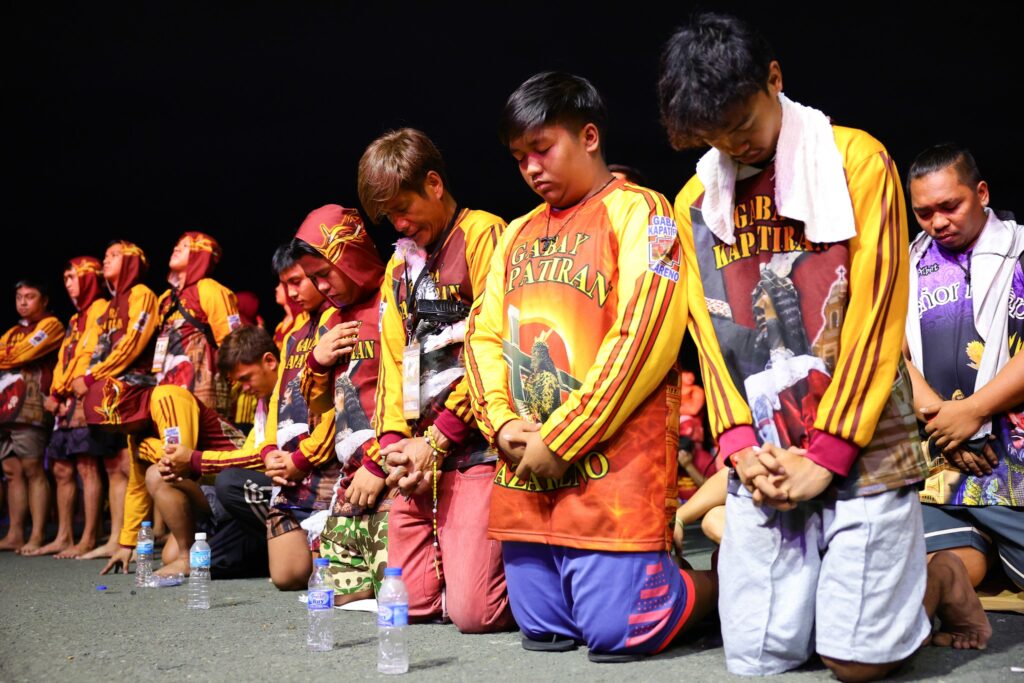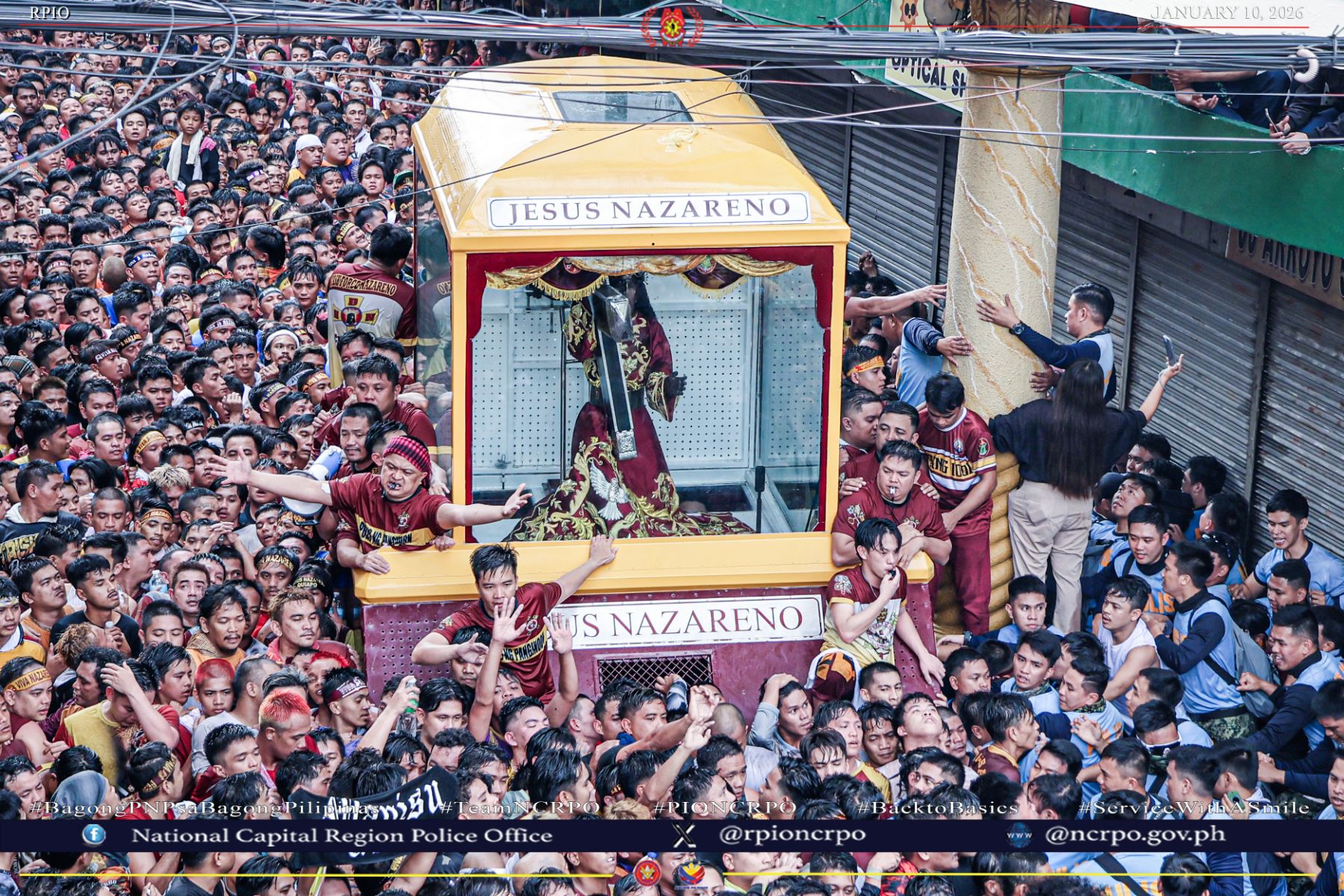
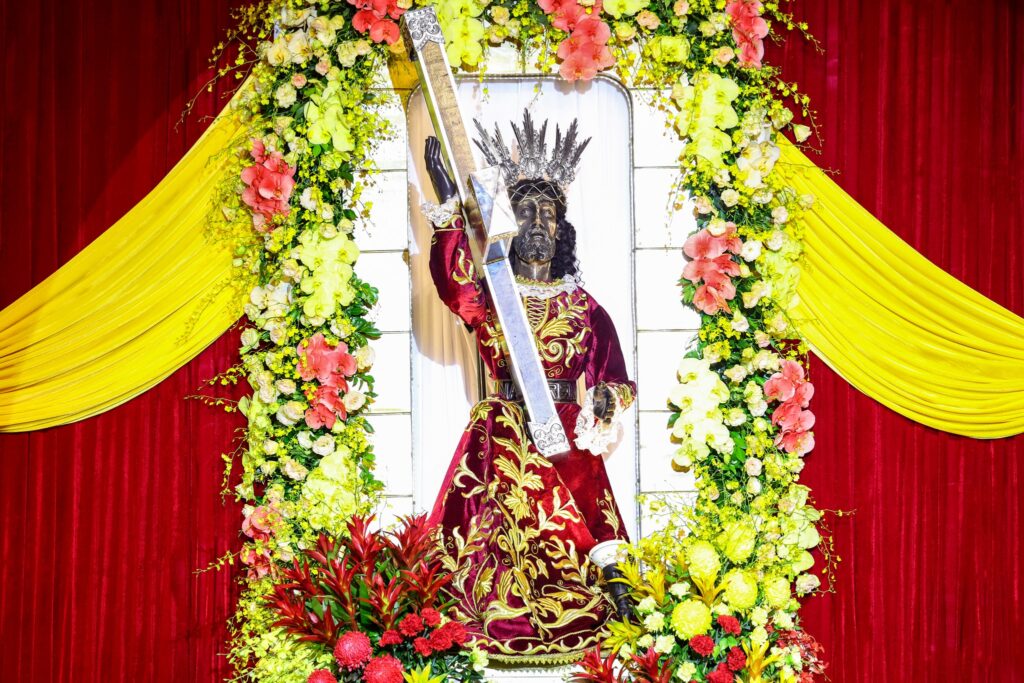
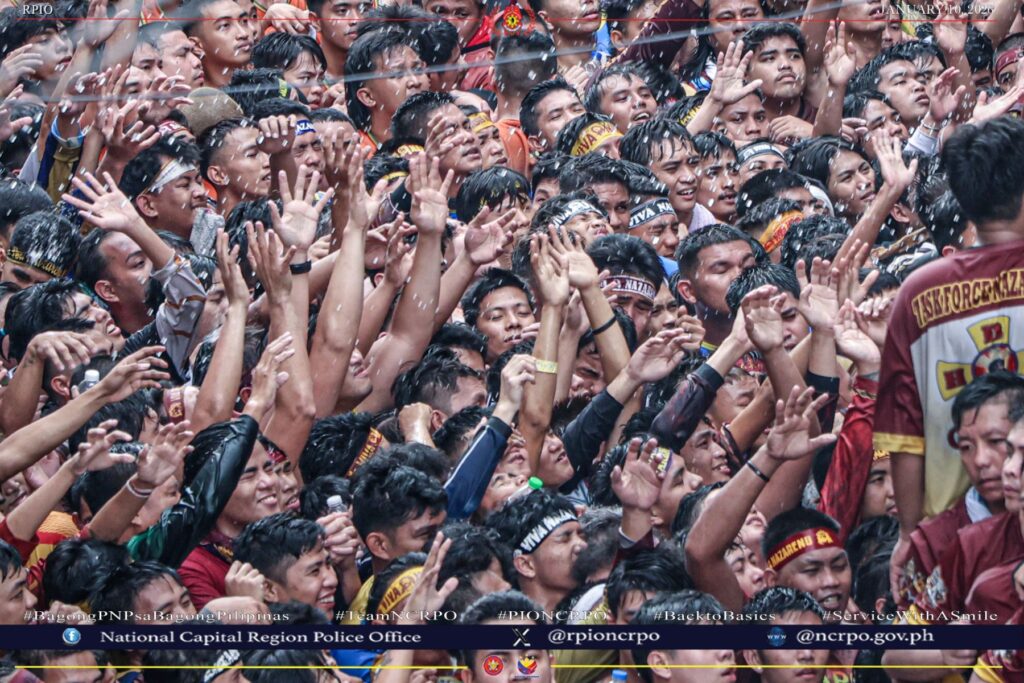
The peaceful and orderly conduct of Traslacion 2026, the annual Feast of the Black Nazarene, highlighted the success of extensive security preparations for one of the country’s largest and most significant religious gatherings, which drew an estimated 2.8 million devotees. Despite the procession lasting nearly 31 hours, one of the longest in recent years, the event unfolded in an atmosphere of deep faith, unity, and cooperation, reflecting the enduring devotion of the Filipino people.
The Philippine National Police (PNP) deployed a total of 18,212 uniformed personnel, including 12,268 from the National Capital Region Police Office (NCRPO) and 1,500 personnel each from Police Regional Office (PRO) 3 and PRO 4A, along with personnel from the National Support Units, the Special Action Force, and other government agencies. This large-scale deployment underscored the PNP’s commitment to public safety during mass gatherings.
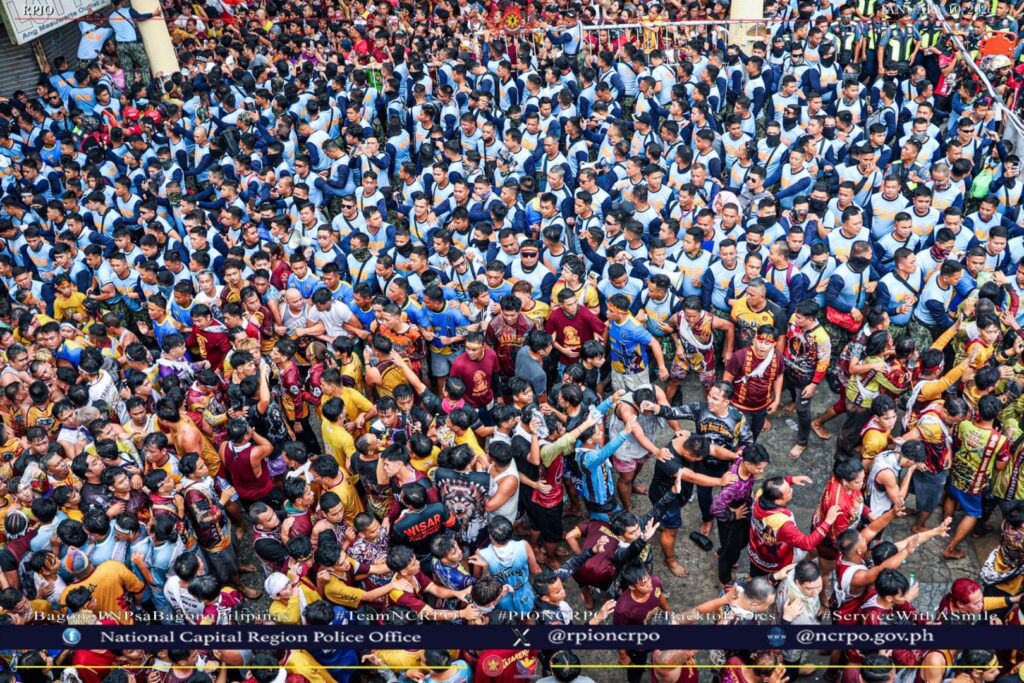
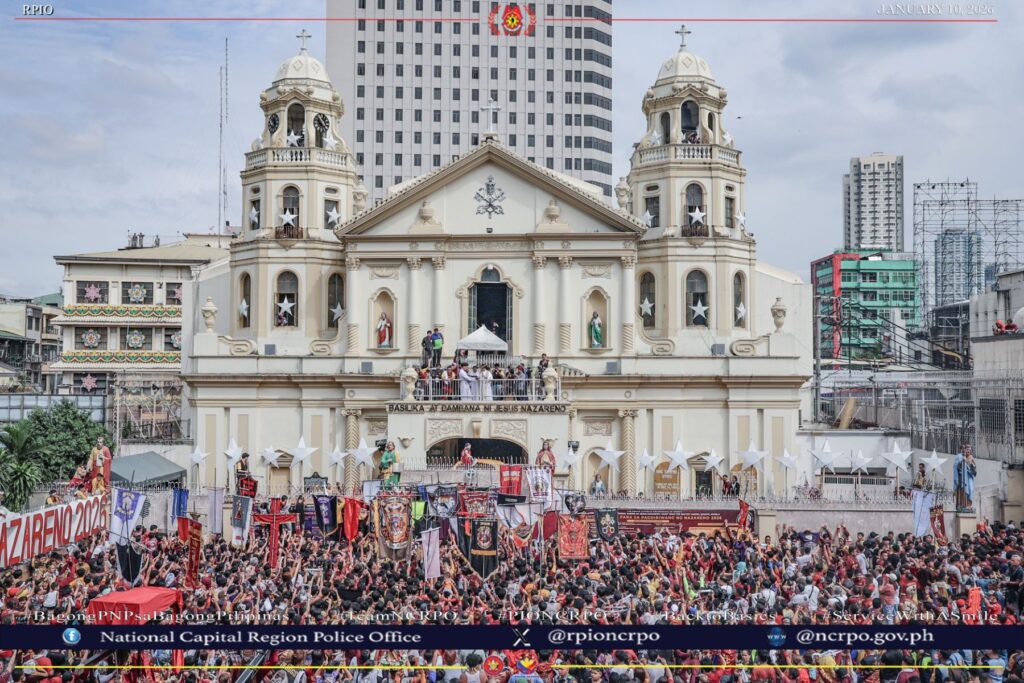
Security operations were concentrated in three key areas: Area 1–Quirino Grandstand, the starting point of the procession; Area 2–the entire Traslacion route; and Area 3–Quiapo Church, the final destination of the revered image of the Black Nazarene. These zones were closely monitored to ensure crowd safety, traffic management, and rapid response to emergencies.
As part of the heightened security measures, PNP reiterated the implementation of the No Drone Flying Zone and No Sail Zone from January 8 to 10, 2026, to regulate air and water traffic during the event. The suspension of the Permit to Carry Firearms Outside Residence and the enforcement of a liquor ban were also strictly implemented throughout the entire City of Manila for the same period. In addition, NCRPO was placed under Full Alert Status from 5:00 PM on January 6 until 5:00 PM on January 10, ensuring heightened police visibility and enhanced rapid response capability.
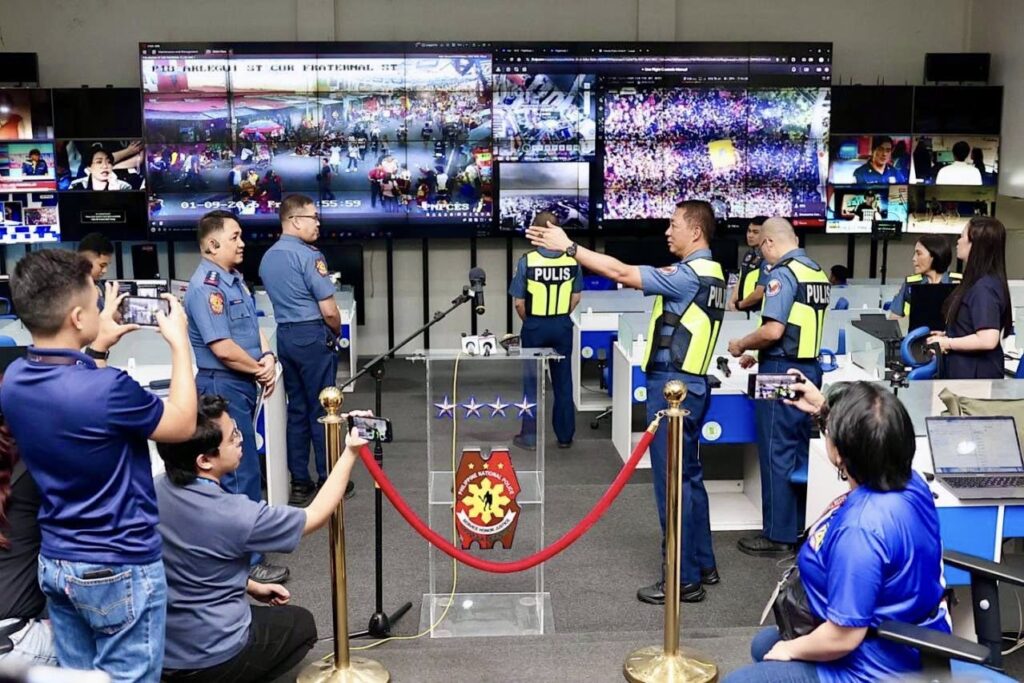
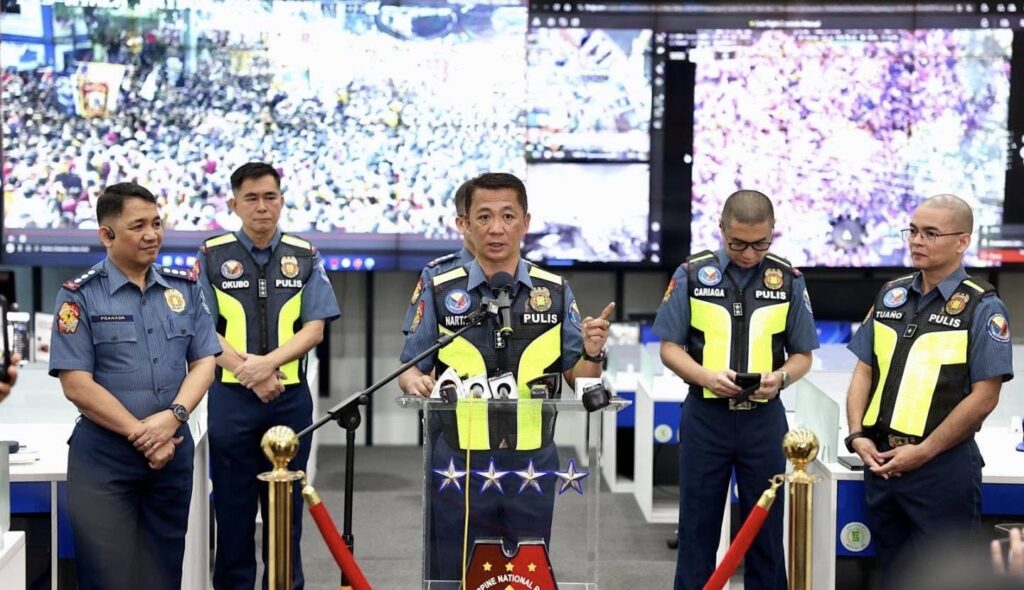
During the grand procession from Quirino Grandstand to Quiapo Church on January 9, Police Lieutenant General Jose Melencio C. Nartatez Jr., Acting Chief, PNP, personally monitored real-time updates at the PNP Command Center. He was joined by PLtGen Edgar Alan Okubo, Deputy Chief PNP for Operations; PMGen Ronnie Francis Cariaga, Director for Operations; PBGen Randulf Tuaño, PNP Spokesperson and Chief of the Public Information Office; Police Colonel Ramon Pranada, Acting Chief of the PNP Command Center; and PCol Berniel Gotoman, Acting Director of the Communication and Electronics Service. The Command Center remained fully operational throughout the event to support the extensive deployment and ensure coordinated responses to developing situations.
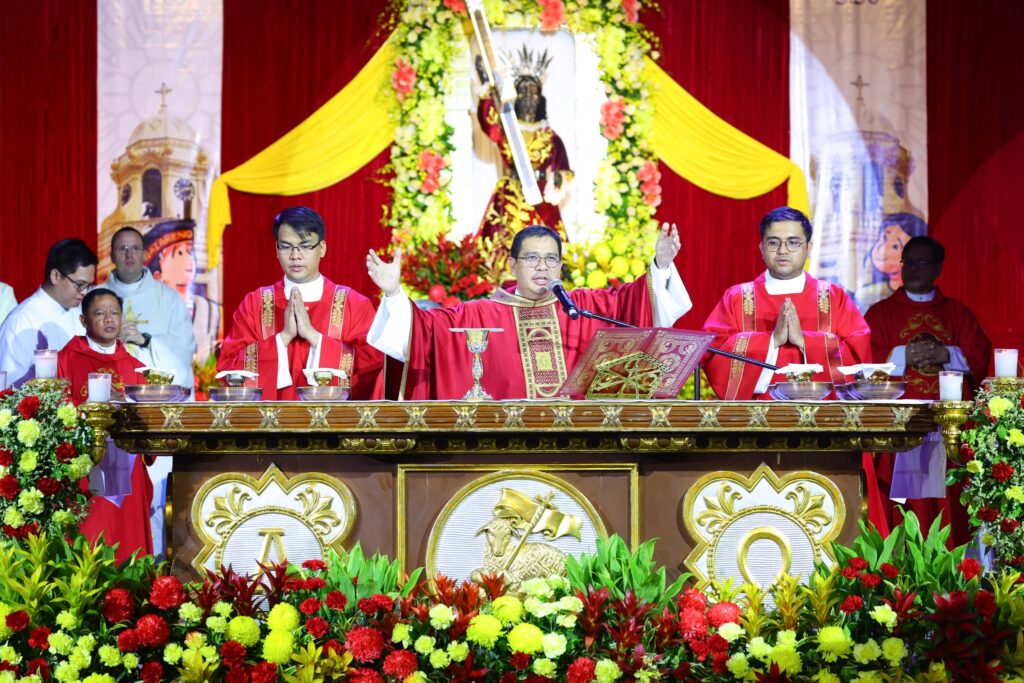
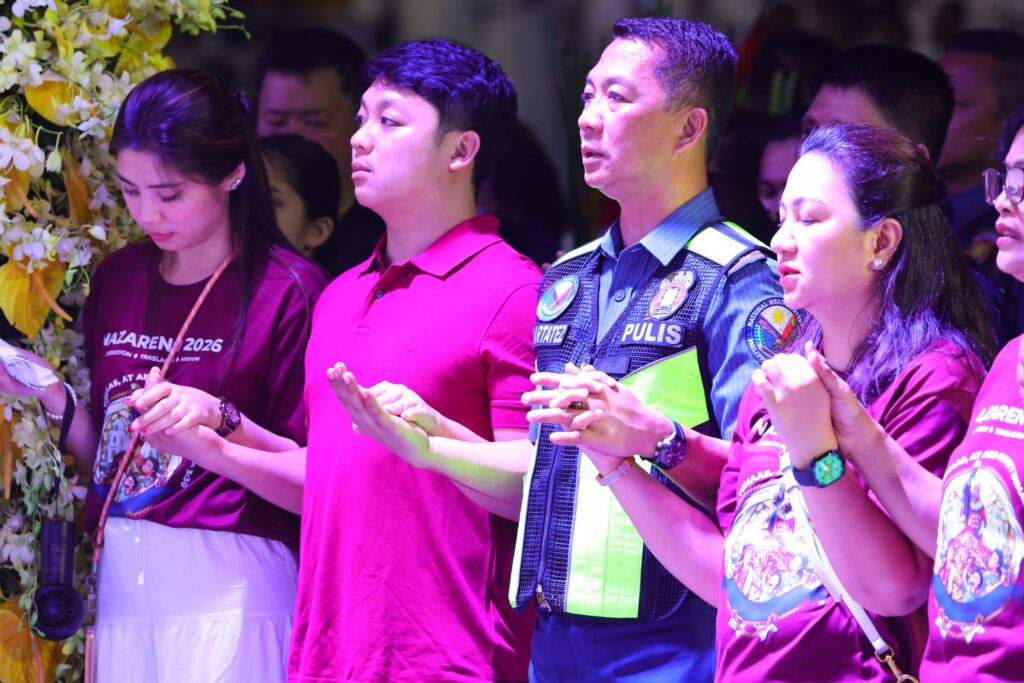
The spiritual highlight of the event was the Eucharistic celebration (Misa Mayor), held at Quirino Grandstand and presided over by Bishop Rufino Sescon Jr., which drew thousands of devotees from various parts of the country. The Mass reflected the deep spiritual tradition associated with the Black Nazarene. PLtGen Nartatez, together with his wife, Mrs. Mary Rose O. Nartatez, joined fellow senior PNP officers, members of the PNP-OLC Foundation, Inc. and devotees in a solemn expression of faith and devotion.
This year’s Traslacion lasted approximately 30 hours and 50 minutes, making it one of the longest processions in history. The extended duration required sustained vigilance and close coordination among security, medical, and crowd management teams to ensure the safe and orderly movement of devotees along the route.
Throughout the procession, authorities monitored more than 1,000 medical-related incidents, most of which were minor and manageable, including fatigue, dizziness, and superficial injuries commonly associated with large-scale religious gatherings. All cases were promptly attended to by on-site medical teams and first responders. Two fatalities were recorded, and PNP confirmed that it coordinated with the families concerned.
PLtGen Nartatez commended both the devotees and the security forces for their cooperation and discipline, stating: “This year’s Traslacion once again showed the depth of our people’s devotion. Sa kabila ng haba at lawak ng prusisyon, nakita natin ang pagtutulungan ng lahat. This proves that faith and public safety can move forward together.”
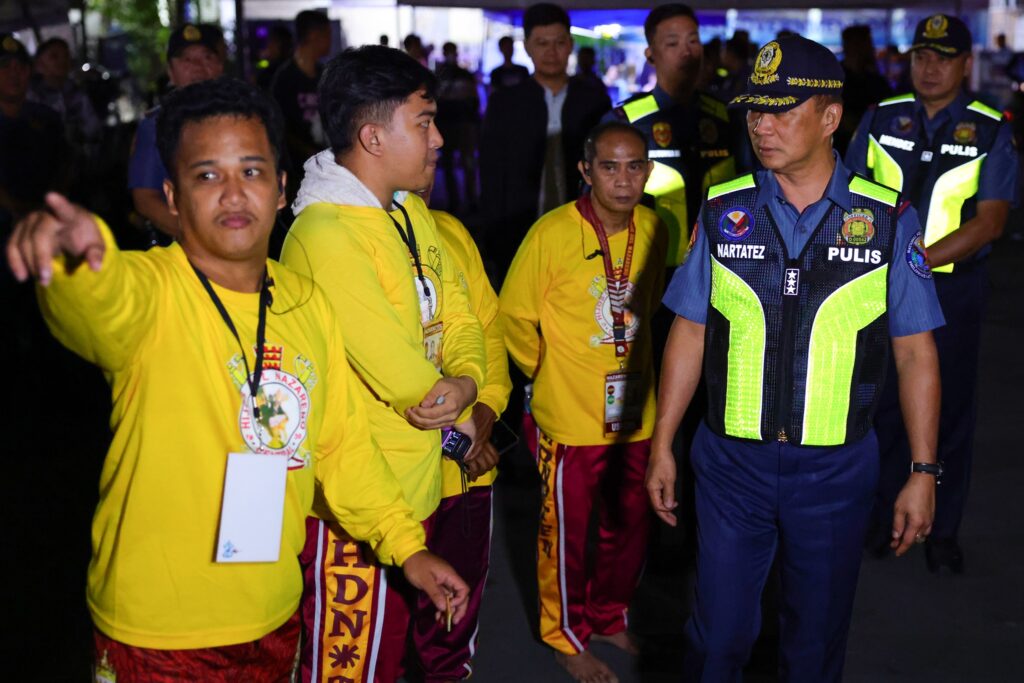
He further praised the dedication and professionalism of police personnel who worked continuously for nearly a full day to manage crowds, secure routes, and assist the public.
“Ipinakita ng ating mga pulis ang malasakit at propesyonalismo, kahit sa mahabang oras ng pagbabantay. This operation was truly a team effort,” he said.
While each Traslacion unfolds differently, PNP noted that previous years provide valuable context for understanding the scale of the event. Prior to the pandemic, processions typically lasted 15 to 22 hours, with 15 hours in 2024 marking one of the shortest and more than 20 hours in 2025, reflecting varying crowd sizes and movement conditions. PNP emphasized that these figures are not for comparison but are used to better understand crowd behavior and further strengthen safety measures for future celebrations.
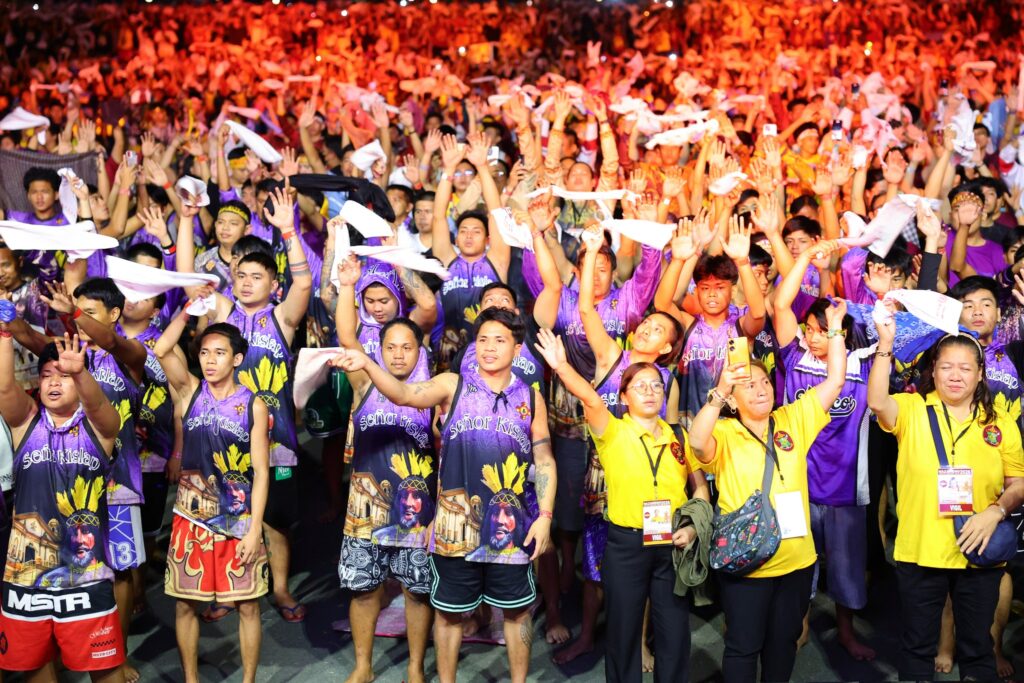
The Nation’s Peacekeepers also expressed their appreciation to Church authorities, volunteers, local government units, partner agencies, and the millions of devotees whose cooperation contributed to the generally peaceful conduct of the event.
Traslacion 2026 stands as a testament to the enduring faith of the Filipino people, the strength of community cooperation, and the effectiveness of coordinated public safety efforts, proving once again that devotion and discipline can move hand in hand during one of the nation’s most revered religious traditions.